
In 2006, former NBA commissioner David Stern and the league rolled out new synthetic basketballs that were made with a composite material instead of leather. They didn't bounce right. They didn't feel right. It got so bad that they made the players' hands bleed. It became a legitimate health concern.
Three months later, the NBA reversed course and rolled back the balls.
Draft your Yahoo Fantasy Baseball team for the 2026 MLB Season
It's time for the NBA to do the same with the 65-game rule. It was a foolish idea to begin with, thinking load management was the root cause of player absences and not a symptom of an increasingly taxing game. It's time to admit it solved nothing and created more problems than the one it tried to address. Like the ill-fated synthetic balls, the NBA may have a larger player health concern on its hands.
Will Cade Cunningham rush back?
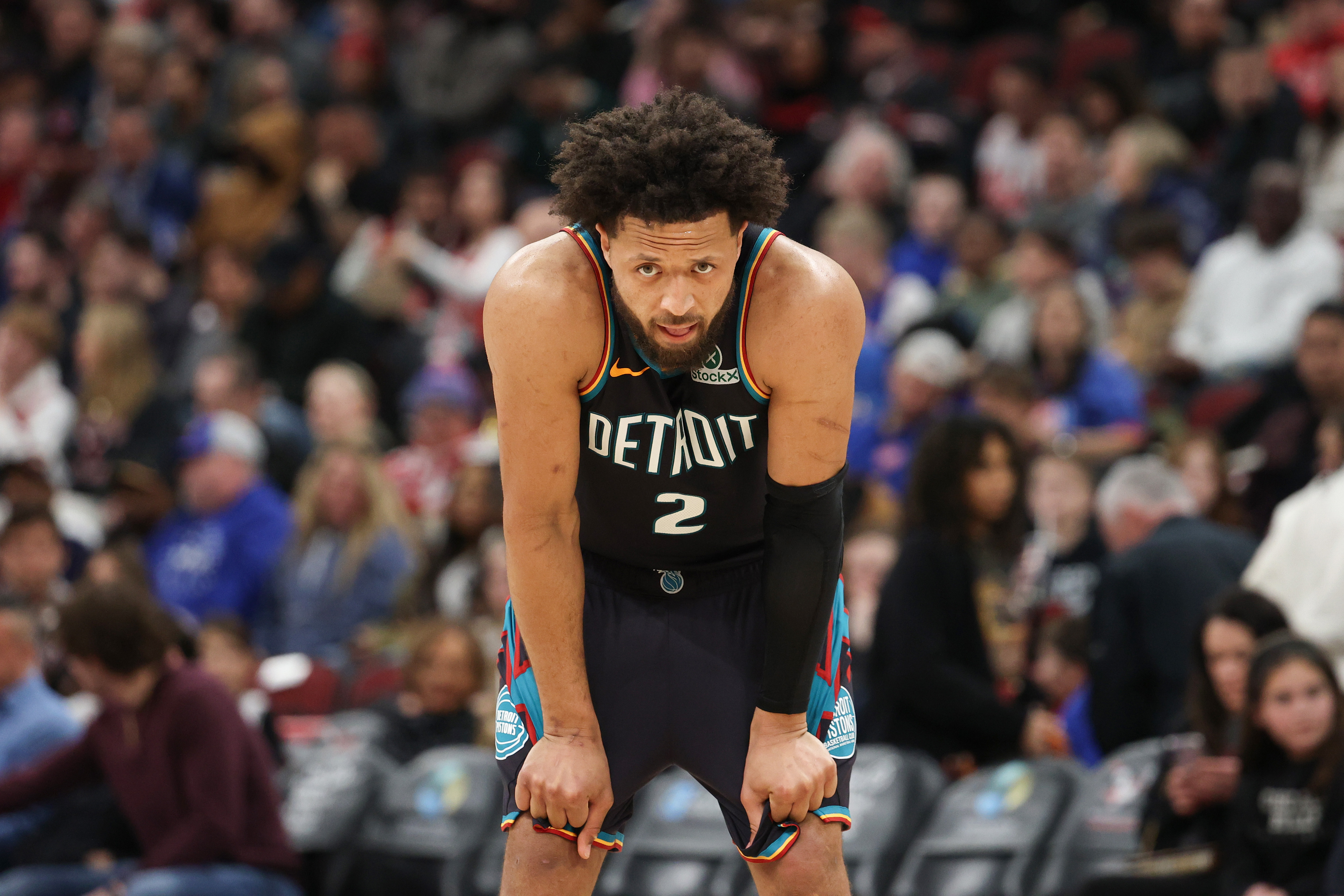
By all accounts, Cade Cunningham has been one of the best players in the NBA this season, leading the Detroit Pistons to the top seed in the Eastern Conference and being the face of one of the feel-good stories in the league.
And then hecollided with Tre Johnsonearly in Tuesday's game against the tanking Washington Wizards. Before the game, Cunningham had been averaging 24.9 points, 10.1 assists and 5.6 rebounds. He was set to become the first Eastern Conference player since Oscar Robertson to average at least 24 points, 10 assists and 5 rebounds per game. He currently leads the NBA with 603 assists and no one is particularly close to eclipsing his total.
And yet, despite an incredible resumé throughout the season,Cunningham may not be eligibleto earn an All-NBA spot or receive any MVP votes this season.
That's because in 2023, the NBA implemented a 65-game rule intended to motivate players to play more. Instead, the rule has only exacerbated the NBA's perception problem, artificially drawing more attention to the player health epidemic and unfairly penalizing players for injuries out of their control.
Like, for instance, Cunningham's scary medical issue. On Thursday, it was announced thatCunningham is suffering from a collapsed lung, or what's known in the medical community as a pneumothorax, that will sideline him for the foreseeable future. The team indicated he would be re-evaluated in two weeks, a mark in the schedule that — coincidentally or not — allows him to returnjuuuuustin time to still be eligible for season-long awards.
If Cunningham is cleared in two weeks, in time for an April 2 tilt against Minnesota, there would be six games left in the Pistons' season. With 60 games on his ledger — his most recent game doesn't count because his five minutes played fall short of the league-mandated 15 — Cunningham would have to play a sufficient number of minutes in five of the Pistons' remaining six regular-season games.
Let's hope the timetable was determined purely for his health and not out of concern for his award eligibility under the 65-game rule. For what it's worth, thequickest returnof a collapsed lung in recent NBA history is two weeks by Terrence Jones in 2015, but players like CJ McCollum and Gerald Wallace needed between three and six weeks. The last thing the NBA wants to do is incentivize players to risk serious medical harm in order to fulfill the core tenets of its Player Participation Policy. But unfortunately, Cunningham's case raises legitimate questions about the incentives the league unnecessarily laid in front of the players.
As Iwrotein January, the 65-game rule is a cure worse than the disease. Because of the NBPA-ratified rule that was issued in order to promote player health, Cunningham now has more incentive to potentially rush back against medical advice and put his lungs in danger. Surely, medical professionals will have the final say and Cunningham's long-term health will be prioritized above all else, right?
Let's hope so. Thankfully for Cunningham, this medical concern arose this season and not last season when he qualified for a $45 million bonus by earning All-NBA status. He signed for the maximum 30% maximum and therefore is not eligible for any additional bonuses this season.
Advertisement
In the case of Cunningham and the 65-game rule, we're left to believe that Cunningham's shortcoming is that he didn't play through injuries enough. Except this injury is not a rub-some-dirt-on-it affliction. A trauma pneumothorax isn't something the NBA wants a player to "tough out."
What is clear is that if the goal of the 65-game rule was to encourage stars to play more, it's not working.
NBA stars are missing more games
Your eyes aren't deceiving you. NBA stars really are more absent than ever. The NBA's official Player Participation Policy defines a star player as one who has been named to the All-Star or All-NBA team in any of the previous three seasons. By this definition, star players have been sidelined to an extent we have not yet seen.
Through every teams' first 68 games in the schedule, NBA stars have played just 67.5% of their games. In other words, stars are missing about one out of every three games. And we haven't even gotten to the final stretch in the season when playoff teams begin to rest stars ahead of the playoffs. It will likely get worse before it gets better.
To put this in perspective, 67.5% through 68 games is a massive drop from last season. At the same juncture last season, the play percentage for stars was 79.5%, a rate of playing four out of five games. Again, now it's just two out of every three. The season before that, in 2023-24, the inaugural season of the 65-game rule, star players played a tick more at this point, suiting up in 80.4% of their games.
Trends are going in the wrong direction, and it's creating a lot of unhappy fans and battered stars. The only star who may be happy about the 65-game rule is Karl-Anthony Towns. Believe it or not, he's the only member of last year's All-NBA team who is currently eligible for awards. That's right: the other 14 members of the All-NBA team are either already disqualified for missing too many games or in jeopardy of missing the criteria altogether.
Among All-NBA First Team members, Giannis Antetokounmpo and Jayson Tatum have already been eliminated from postseason award qualification. Nikola Jokić can miss only one more game. Shai Gilgeous-Alexander and Donovan Mitchell are one moderate injury away from being ruled ineligible.
Elsewhere on the 2024-25 All-NBA list, Stephen Curry, LeBron James, Tyrese Haliburton and Jalen Williams have already been disqualified. Jalen Brunson and James Harden are on track to make the cut, but Anthony Edwards, Evan Mobley and Cunningham will need luck on their side.
.png)
As of Friday morning, only seven players from the 2024-25 All-NBA squad are on pace to be eligible for awards. Seven of the 15. That means more than half of the team is positioned to miss the cut. And that's not even considering other All-Stars from last year who have been too injured to qualify for All-NBA. Damian Lillard, Pascal Siakam, Trae Young, Darius Garland, Tyler Herro, Jaren Jackson Jr., Anthony Davis and Kyrie Irving would also miss the All-NBA cut as well.
Towns being the only eligible reigning All-NBA player is a fitting face to the NBA's conundrum. The Knicks big man has seen his scoring plummet to levels unseen since his rookie season and his productivity measures are down across the board. Without the 65-game rule, he'd have little to no shot of making the team again. But with the 65-game rule, he might fall backwards onto the first-team honors and take the spot of more-deserving players like Cunningham.
What a difference a month makes. A few weeks ago,Cunningham was seen as the default MVPas a result of his star peers like Gilgeous-Alexander and Jokić falling prey to injury. Now, after a fluke elbow to his back, it's Cunningham who is in jeopardy of losing eligibility status for both MVP and All-NBA. Cunningham's trauma pneumothorax is a cold reminder that a player's health status can change instantly without their control.
.png)
Towns making All-NBA First Team by default is one thing, but there are trickle-down effects of these star-crossed injuries. We're not far away from a world in which Payton Pritchard or Towns' teammate Mikal Bridges make All-NBA simply because all the more deserving players caught the injury bug here and there. The Pritchards of the world certainly deserve praise for avoiding injuries that captured their peers. So, here's an idea: instead of a 65-game rule, why not go the other way and establish an Iron Man team?
Before we know it, the league awards will become a copy-and-paste Iron Man team across the board rather than celebrating greatness. Before the league incentivizes Cunningham or a future star to aggravate a serious medical condition, the 65-game rule should take its rightful place alongside the composite ball and go on the shelf of ill-fated NBA ideas.


0 Comments