
CORTINA d'AMPEZZO, Italy –Danny Caspernever cries.
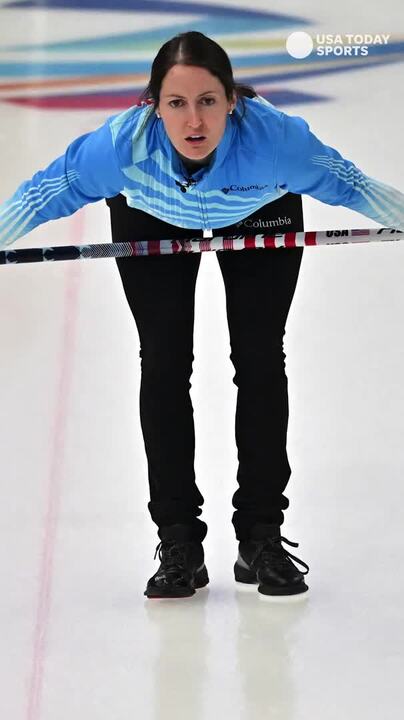
He's not the emotional type. He's actually somewhat aloof. He and his curling teammates joke that he's never focused enough to really be thrown off in-game. But looking back on the last two years from atop the Italian Dolomites at his firstWinter Olympics, Casper can't help but choke on his words. Can't stop the tears from welling in his eyes. Can't not feel all the feelings.
"I don't want to say I never thought I'd be here, because that's all I thought about every day," Casper told USA Today. "... But at the same time, it's like, I did mean it when I said, 'I guess I'll just have to watch my friends there and cheer them on.'"
Curling is Casper's life. He's been doing it for 13 years, since he was one of very few juniors at the Ardsley Curling Club in New York hanging around on the ice with adults gracious enough to let him tag along. Ask him what he does outside of the sport, and he won't really have an answer for you. ("Yeah, maybe not the healthiest thing," he conceded sarcastically. "Not sure.")


2026 Winter Olympics kick off with curling before opening ceremony
But two years ago, he had to give it up. Had to "forget curling" for a little while. A decision his body made for him, because he could no longer walk. "Could not do anything really." That included operating his cell phone, which meant it definitely included picking up andthrowing a forty-something-pound curling stone.
Casper developedGuillain-Barré syndrome, or GBS– an autoimmune disease in which the body's immune system attacks the nerves. This can lead to numbness, weakness and paralysis. It took three months for doctors to figure out what was going on with him. He's been living with the diagnosis, whichaffects one to two people in every 100,000, for two years and counting.
Days are better now than they used to be. He's a skip at the Winter Games after all, havingdethroned John Shuster & Co. at the U.S. Olympic Trialsto qualify. But the pain still gets to him. After making it through this four-year cycle, Casper's not sure he could continue into 2030 if he still feels this way then. (The exact cause and cure for GBS is unknown, though most people recover fully. Casper was initially told it'd go away within eight months to a year.)
He's doing his best to take this experience in. He wishes he was better at that sort of thing. "I'm always, like, screwing around during the game and stuff, and I don't think the moment has gotten to me in good and bad ways," Casper said. "I almost would like to be a little bit more, like, 'Wow, I'm here at the Olympics.'"

But there are moments, like Tuesday's press conference, when Casper was asked what it meant to be in Cortina after all he'd been through. His voice caught in his throat and his chin quivered as he answered. Competing at the highest level is special. But competing at all?
"At the end of the day, I'm curling," Casper said. "It's pretty much all I can ask for."
Casper initially brushed off the first indication that something was amiss back in 2024. He was competing atUSA Curling Mixed Doubles Nationals. He doesn't usually compete in mixed doubles. And he doesn't usually sweep, which he was doing for partner Vickey Persinger.
Sweeping wasn't one of Casper's strengths. So when he started dealing with neck and back pain at the event, he chalked it up to a skill issue as opposed to a medical one. But over the next two weeks, he "went downhill super fast."
Casper bounced from doctor to doctor for three months. They threw a phone book of diagnoses his way. Maybe it'smultiple sclerosis, or MS, a disease that "causes breakdown of the protective covering of nerves," according to Mayo Clinic. MS can cause symptoms including but not limited to numbness, weakness, trouble walking and vision changes.

Maybe it's a vitamin D deficiency. Casper scoffed at the thought. No way a vitamin deficiency was causing all this. Then he Googled it, and understood where they were coming from. ("I think I did a pretty good job of not really Googling for a while, but had to a little bit," Casper joked. "And then it's like, you know, 'You're dead.'")
Advertisement
So he spent a month taking vitamin D pills. Which did nothing. Great, he thought, another month wasted.
The USOPC (U.S. Olympic & Paralympic Committee) referred him to a doctor through its partnership with the University of Florida hospital system. After reviewing all of Casper's information and giving him anEMG (electromyography) nerve test, he diagnosed the 22-year-old with GBS.
"A lot of people think, oh, I was sick, and I got through it, and now I'm here at the Olympics. Like, 'What a story,' or whatever. It's not over at all."
Casper takes medication for treatment, changing up his regiment every so often to meet his needs. He started withgabapentin, a nerve blocker. Then "a bunch of muscle relaxer stuff." A few months ago, he started takingcarbamazepine, a medication typically used for seizures.
It's working. For the most part. But Casper didn't want to risk a different cocktail of medications that'd make him feel worse at the Olympics. He'll wrap up this season, go home, and see about trying something new this summer.
Once his dexterity started to return, Casper decided to get back into curling. He missed more than half of the 2024-25 season. At nationals last season, Casper andUSA CurlingalternateRich Ruohonen, 30 years Casper's senior, decided each skip would play every other game. Basically load management.
Teammates help Casper clean his rocks on the iceif his hands are bothering him in a game, a move he's sure makes other teams view him as some kind of diva or premadonna. He still goes to the gym with them at 6 o'clock most mornings. He focuses on mobility exercises rather than strength training, showing up because he recognizes the importance of just being there.
Together they won Olympic Trials, kicking off a team led by American curling legend John Shuster to clinch their spot in Cortina. A shocking feat as every upset is made even more impressive because of how often they had to work with another skip while Casper was away.
"We've got absolutely nothing to lose," he said, though that doesn't take away from the ultimate goal: Gold.
One of the hardest parts of living with GBS, Casper said, is that you can't see it. No one can.
He wants others living with invisible autoimmune diseases to know it's OK to lean on people for support. Even if it feels weird or hard.
Just like a curling game. Casper captains the team, but he has to rely on sweepersAidan OldenburgandBen Richardsonto guide the rock to the button. Friends, family and teammates are the sweepers in Casper's life. They helped guide him to Cortina for a chance at gilded glory.
Reach USA TODAY Network sports reporter Payton Titus at ptitus@gannett.com, and follow her on X @petitus25.
This article originally appeared on USA TODAY:Danny Casper curling with Guillain-Barré syndrome at Winter Olympics


0 Comments